





Most people don’t call a professional organizer because they want a picture-perfect home.
They call because they want to feel differently in their home.
After more than 25 years as a professional organizer and move manager, I’ve learned that people reach out for many different reasons. Some simply want to finish a project they’ve been putting off. Others are preparing for a move, settling an estate after the loss of a loved one, or trying to regain control after a major life transition.
But many people call because they’re overwhelmed.
They don’t know where to start.
They’ve reached the point where the clutter around them has become emotional clutter, too.
That’s why decluttering for mental health isn’t really about getting rid of stuff. It’s about reducing the weight you’ve been carrying and creating a home that supports your well-being instead of draining it.
Clutter Is More Than Physical
One of the first things I notice during an introductory consultation is the language people use about themselves.
They’ll often say things like:
“My house is a disaster.”
“I’m such a mess.”
“I’m a total hoarder.”
These comments are almost always much harsher than reality.
People aren’t just describing their homes. They’re describing how they feel.
As organizing pioneer Barbara Hemphill famously said, “Clutter is delayed decisions.”
That definition resonates with me because clutter is rarely about laziness or lack of motivation. It’s often the result of hundreds or thousands of decisions that have been postponed because life got busy, emotions got complicated, or there simply wasn’t enough time.
Those delayed decisions accumulate until they begin affecting nearly every part of daily life.
How Clutter Affects Mental Well-Being
I’ve seen firsthand how clutter affects much more than someone’s home.
It affects relationships because people stop inviting friends and family over. They worry about being judged or feel embarrassed about their living environment. Over time, that isolation can become its own source of stress.
It affects sleep.
I’ve had clients tell me they wake up in the middle of the night thinking about the clutter surrounding them. If your bedroom is filled with unfinished projects, piles of paper, or things that don’t belong there, it’s difficult for your brain to fully relax.
It affects work.
Some people thrive in a visually busy environment, while others need a clean workspace. Neither approach is right or wrong. What matters is having systems that work for you. Without those systems, you’re spending unnecessary time searching for things, making the same decisions repeatedly, and feeling less productive.
Ultimately, decluttering and stress reduction go hand in hand because clutter quietly demands your attention, even when you’re trying to ignore it.
Sometimes Clutter Is Protecting Something Deeper
One experience has stayed with me throughout my career.
I was working with a client who didn’t have what most people would consider a cluttered home. We were sorting through a pile in her bedroom when we found a sonogram from a pregnancy she had lost.
She immediately burst into tears.
Without realizing it, she had covered that painful memory with other belongings because she wasn’t ready to face it.
Moments like these remind me that organizing isn’t always about the objects themselves. Sometimes those objects represent grief, loss, guilt, hope, or memories we aren’t ready to revisit.
Rather than forcing a decision, I suggested we create what organizing expert Judith Kolberg calls an emotional box, or E-Box.
We placed the sonogram and related keepsakes inside a beautiful box. She knew exactly what was inside, and she could decide when—or if—she wanted to revisit it.
Nothing was hidden.
Nothing was forgotten.
It was simply honored.
An E-Box prevents painful surprises while giving people permission to process difficult emotions on their own timeline.
Sometimes that’s exactly what’s needed to continue making progress.
Decision-Making Is the Heart of Organizing
People often think organizing is about throwing things away.
It isn’t.
It’s about making decisions.
Years ago, I was helping a client organize her home office. Before we began, I picked up a single paperclip and asked her, “What do you want to do with this?”
She laughed, but later told me that moment completely changed how she thought about organizing.
She realized that every item, from a paperclip to a filing cabinet, requires a decision.
Keep it.
Recycle it.
Relocate it.
Donate it.
Store it.
Every decision moves you forward.
Every delayed decision keeps you stuck.
One of the Biggest Mistakes People Make
One of my favorite home organization tips surprises many people.
Stay where you are.
If you’re organizing a closet, stay in the closet.
If you’re organizing your entryway, stay in the entryway.
People often lose momentum because they begin sorting, find something that belongs in another room, walk away to put it back, notice something else that needs attention, and before long they’re working on four different spaces at once.
That’s exhausting.
Instead, continue sorting and categorizing until you’ve finished that one area. Create piles or containers for items that belong elsewhere. Once you’ve completed the sorting, then deliver everything to its proper home.
Protecting your focus protects your energy.
When Everything Feels Overwhelming
Sometimes people look around and don’t even know where to begin.
My advice is simple.
Start smaller than you think you should.
If an entire room feels overwhelming, lay down a sheet to cover the surrounding areas so you can focus on one manageable space.
Focus on one drawer.
One shelf.
One pile of paperwork.
One corner.
Progress builds confidence, and confidence builds momentum.
Every organized space becomes proof that you can tackle the next one.
An Organized Home Isn’t About Perfection
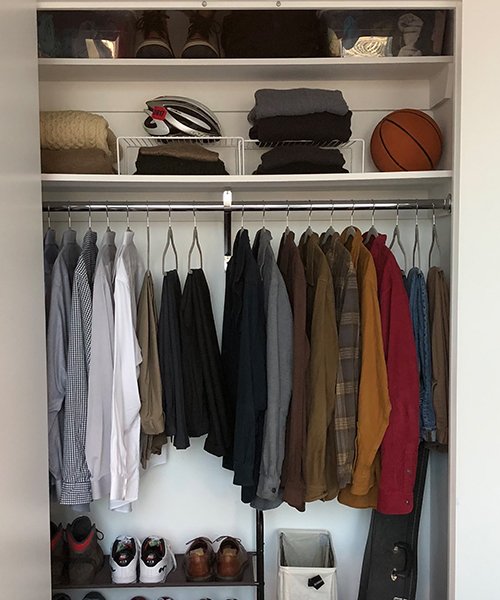
When people think about organization, they often picture magazine covers or beautifully styled rooms in home décor catalogs.
That’s not what we’re trying to create.
The real organized home benefits have very little to do with appearances.
An organized home is one where you know where your things are.
Where your systems support your daily life.
Where you feel comfortable inviting people in.
Where you can relax instead of constantly thinking about what still needs to be done.
In other words, it’s about creating a peaceful home environment that helps you feel calm, capable, and in control.
That’s what clutter-free living really means.
You Don’t Have to Do It Alone
One of the most important things I tell clients is this:
You don’t have to figure it out by yourself.
Sometimes all people need is someone to help them make decisions.
Sometimes they need someone to keep them focused.
Sometimes they need someone who understands that organizing isn’t just physical work. It’s emotional work, too.
Asking for help isn’t admitting defeat.
It’s choosing to invest in your well-being.
Because when your home begins to support you instead of overwhelm you, something remarkable happens.
You breathe easier.
You think more clearly.
You relax more deeply.
And you begin to feel at home in your home again.
Ready to Create a More Peaceful Home?
If you’re ready to stop feeling overwhelmed and start creating a home that supports your well-being, we’d love to help.
Schedule a complimentary introductory call with our team to talk about your goals, the challenges you’re facing, and how we can help you create a more organized, functional, and peaceful home.
Not quite ready to take that step?
Subscribe to our monthly newsletter for practical organizing tips, inspiration, and expert advice to help you make steady progress, one small decision at a time.
No matter where you are in your organizing journey, remember this: you don’t have to do it alone, and it’s never too late to create a home that helps you feel your very best.