




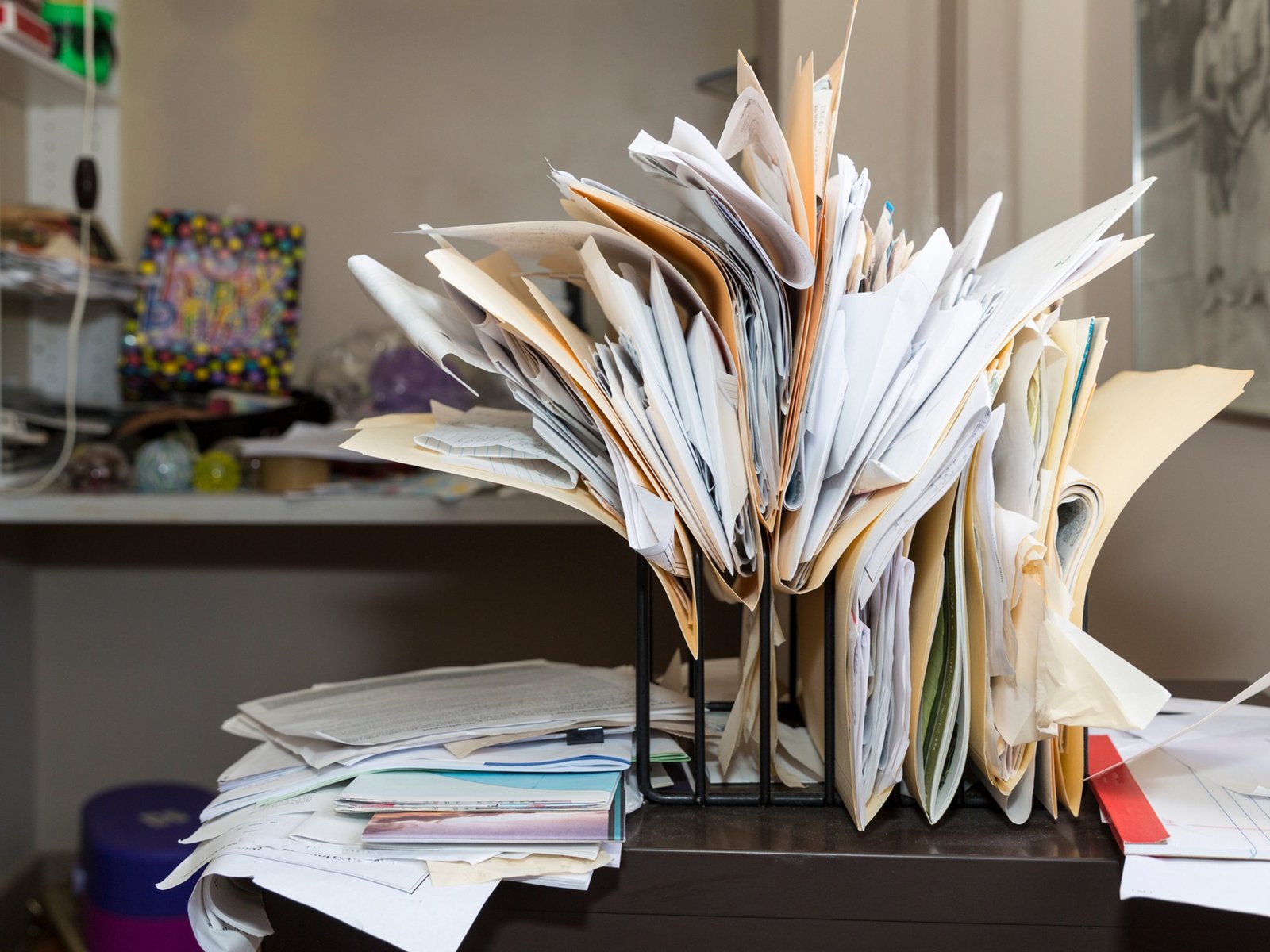
If you are wondering how to organize paper clutter, you are not alone. When clients tell us paper is “taking over,” what they really mean is this: paper keeps coming in, and there is no system to deal with it.
It can feel like little paper bombs are dropping into your home every day. Mail, school papers, medical forms, tax documents, statements. Without a plan, those papers land on counters, tables, and desks and quietly grow into stressful piles.
The good news is that you do not need a complicated system. You need a simple one that works in real life.
Why Paper Feels So Overwhelming
Paper clutter is different from other types of clutter.
Every single piece has to be looked at. You cannot just glance at it and move on. You have to read it, understand it, and often decide what action to take. A form might need to be filled out. A bill needs to be paid. A tax document has to be saved for later.
Paper represents unfinished business. That is why it feels heavy.
The people who struggle most with paper clutter are often:
- Busy families juggling work, school, and activities
- Seniors who feel they must read everything before letting it go
- People going through life transitions like moving or downsizing
In all of these situations, paper piles up when there is no clear mail organization system and no routine for processing what comes in.
Step 1: Stop Paper at the Door
One of the best paper clutter solutions starts before paper even enters your home.
At the mailbox or right inside your front door, sort immediately:
- Recycle junk mail and envelopes you do not need
- Shred anything with personal information that is not needed
- Bring inside only what is truly important
If everything comes into the house, create a small paper sorting zone by the door with:
- A recycling bin
- A shredding bin
- A basket or bin for important papers
This simple habit is one of the easiest ways to reduce paper clutter.
Step 2: Separate Action Papers from Filing
Once paper is inside, it should go to one of two main places.
Action Papers
These are papers that require you to do something. Pay a bill. Fill out a form. Call a doctor. Respond to a school notice.
Keep these together in one clearly defined spot, like:
- A bin or folder labeled “Action”
- A vertical file near your desk
- A basket in your home office
If the action is not immediate, add it to your calendar. The paper supports the task, but the reminder should live on your calendar, not just in a pile.
Filing Papers
These are papers you need to keep for reference but do not require immediate action. Tax forms after taxes are filed are a good example.
These belong in your long term files, not in your action pile.
Step 3: Organizing Important Documents at Home
When it comes to organizing important documents at home, most households have the same core categories:
- Home (mortgage, repairs, warranties)
- Financial (tax returns, investment information)
- Medical (insurance, medical history, major bills)
- Insurance (home, auto, life)
- Legal (wills, power of attorney, trusts)
- Kids (school records, important milestones)
The simplest setup is a file drawer or portable file box with clearly labeled folders for each category. It does not need to be fancy. It just needs to be consistent and easy to access.
Many people keep far more than they need. I once met a friend’s father who proudly told me he had saved every single utility bill he had ever paid, going all the way back to the 1950s. He had multiple filing cabinets filled with decades of statements he never needed to reference again. A water leak eventually destroyed all of it, and while that sounds like a disaster, it was almost a strange kind of relief. He would never have let it go on his own.
Old utility bills, outdated statements, and decades of paid invoices usually do not need to be saved. If you are unsure, check with your accountant, financial planner, or attorney to learn what is truly necessary.
At the same time, some papers are worth keeping for emotional reasons, like meaningful letters from friends or family. Not all paper is clutter. Some of it is part of your story.
Step 4: Reduce Paper at the Source
A big part of how to reduce paper clutter is stopping it before it starts.
Encourage less paper to enter your home by:
- Switching to digital statements whenever possible
- Opting out of catalogs and mailing lists
- Subscribing to digital versions of magazines
- Using a shredding service to clear out large backlogs of old paper
The less paper coming in, the easier your system is to maintain.
Step 5: Build a Simple Maintenance Habit
A system only works if you use it.
Once a week, take a few minutes to:
- Review your action paper bin
- Pay, respond, or schedule what needs attention
- Move completed items into filing
Once a year, do a light review of your files. Remove outdated documents and make sure important categories are still easy to find. Life changes, and your paper system should reflect that.
3 Quick Wins to Start This Week
If you feel buried, start small.
- Set up a paper sorting zone by your front door with recycling, shredding, and one bin for important papers.
- Create one container labeled “Action” for anything that requires a response.
- Ask your accountant or financial advisor what documents you truly need to keep, so fear does not drive your decisions.
These small steps can dramatically improve how you organize paper clutter at home.
When It Is Time to Get Help
If you feel anxious every time you look at a paper pile, or you have boxes of unsorted documents from years ago, you do not have to tackle it alone.
Paper often becomes especially overwhelming during moves, downsizing, or when adult children are helping aging parents. These situations come with emotional and logistical layers that make decisions harder. Sometimes it is not just a pile on a desk. It is decades of files, old statements, and records that no one has reviewed in years, like the father who saved every utility bill since the 1950s.
That is where professional support can make all the difference. At Organize Me, we help clients create realistic paper clutter solutions, set up simple systems, and feel confident about what to keep and what to let go.
If paper has been weighing on you, this may be the moment to finally get a system that works for your life. Schedule a conversation with us and let’s make paper feel manageable again.